Featured Publications
The Trilateral Bond: Mapping a New Era for Latin America, the United States, and Europe
Egypt's Litigious Transition: Judicial Intervention and the Muddied Road to Democracy
A New Deal: Reforming US Defense Cooperation with Egypt, Libya, and Tunisia
The Transatlantic Trade and Investment Partnership: Ambitious but Achievable
Time to Move from Tactics to Strategy on Iran
Lowering the Price of Russian Gas: A Challenge for European Energy Security
Does Beijing Have a Strategy? China's Alternative Futures
Council News
Mihaela Carstei on the US-Canada Keystone Pipeline Project (CTV)
On the heels of Canadian Prime Minister Stephen Harper’s visit to the United States, Energy & Environment Program Associate Director Mihaela Carstei joins CTV to discuss the Keystone Pipeline project that would transport tar sands oil from Canada and the northern United States to refineries in the Gulf coast of Texas.
Frederic Hof on US Position in Syria Crisis (BBC World Service)
Hariri Middle East Center Senior Fellow Frederic Hof speaks with the BBC’s Tim Franks about the cautious US position with respect to resolving the Syria crisis.
Shuja Nawaz Response to Pakistan Election Results (Radio Free Europe/Radio Liberty)
South Asia Center Director Shuja Nawaz joins a live Google Hangout organized by RFE/RL to discuss Pakistan’s historic elections.
Shuja Nawaz Speaks About Pakistan Elections (CCTV America)
South Asia Center Director Shuja Nawaz joins CCTV America to discuss Pakistan’s historic elections.
History of the Atlantic Council
Within a few years of the signing of the North Atlantic Treaty in 1949, voluntary organizations emerged in the member countries of the Alliance to promote public understanding and support for the policies and institutions that would build collective security and peace. This international network of citizens’ associations was bound together formally in 1954 with the creation of the Atlantic Treaty Association.
In 1961, former Secretaries of State Dean Acheson and Christian Herter, with Will Clayton, William Foster, Theodore Achilles and other distinguished Americans, recommended the consolidation of the U.S. citizens groups supporting the Atlantic Alliance into the Atlantic Council of the United States.
Throughout the 1960s, the Council produced a series of reports on the state of public opinion towards Alliance member countries and sought to actively educate the public about the need for engagement in international affairs through television commercials (starring Bob Hope), an academic journal, and its newsletter. In 1967, the Council produced its first edited volume, Building the American – European Market: Planning for the 1970s. By 1975, the Council was producing numerous policy papers, books, monographs, and other works with the help of international practitioners and had expanded the scope of its work to include environmental management and the relationship between Japan and the West.
In 1979, Atlantic Council Vice-Chairman Theodore Achilles, recognizing the need to formally reach out to young leaders, established the Committee on Education and the Successor Generations. He wanted future policymakers to understand the solidarity required among people of good conscience if they were to build a better world. In 1980, the Council began to host mid-career professionals for a one-year fellowship, in order to provide opportunities for government officials, research scholars, business, media and other private sector leaders worldwide to pursue a year of independent study. In 1985, the NATO Information Office opened in conjunction with the U.S. Department of State, in order to focus public attention on issues of importance to the collective security of the United States and its Allies.
The Council convened a major international conference on rebuilding East-West relations in 1988, featuring speeches by President Ronald Reagan, then-presidential candidate Michael Dukakis, Zbigniew Brzezinski, Jeanne Kirkpatrick, Colin Powell, and Brent Scowcroft.
After the fall of communism, programs began to examine the transition underway in Eastern Europe and the former Soviet states, the long-term impact of the conflicts in the Balkans, efforts toward European integration, and nuclear security. Since 1996, the Council has recognized “Distinguished International Leaders” through its annual awards dinner. In 2004, the Council became the U.S. partner in the British-North American Committee, a group of leaders from business, labor, and academia in the United Kingdom, the United States, and Canada committed to harmonious, constructive relations among the three countries and their citizens.
Since its inception, the Council has administered programs to examine political and economic as well as security issues, and to cover Asia, the Americas and other regions in addition to Europe. All its programs are, however, based on the conviction that a healthy transatlantic relationship is fundamental to progress in organizing a strong international system.
Past Leadership
James L. Jones, Chairman 2007-2009
Henry E. Catto, Chairman 1999-2007
Jan M. Lodal, President 2005-2006
Christopher J. Makins, President 1999-2005
Brent Scowcroft, Chairman 1998-1999
David C. Acheson, President 1993-1999
Rozanne L. Ridgway, President 1989-1993, Co-Chair 1993-1996
George M. Seignious II, President 1985-1989
Andrew J. Goodpaster, Chairman 1985-1997
James R. Huntley, President 1984-1985
Kenneth Rush, Chairman 1978-1985
Francis O. Wilcox, Director General 1975-1984
Henry H. Fowler, Chairman 1973-1978
W. Randolph Burgess, Chairman 1971-1973
Livingston Merchant, Chairman 1967-1971
Theodore C. Achilles, Resident Vice Chairman 1963-1986
Lauris Norstad, Chairman 1963-1967
Richard J. Wallace, Director General 1962-1975
Christian Herter, Chairman 1961-1963
FEATURED EVENTS
15th Anniversary of PDD-63: History of Cyber Critical Infrastructure Protection
On May 22, the Atlantic Council's Cyber Statecraft Initiative will hold a discussion on the history of cyber critical infrastructure protection in recognition of the 15th anniversary of Presidential Decision Directive 63 (PDD-63).
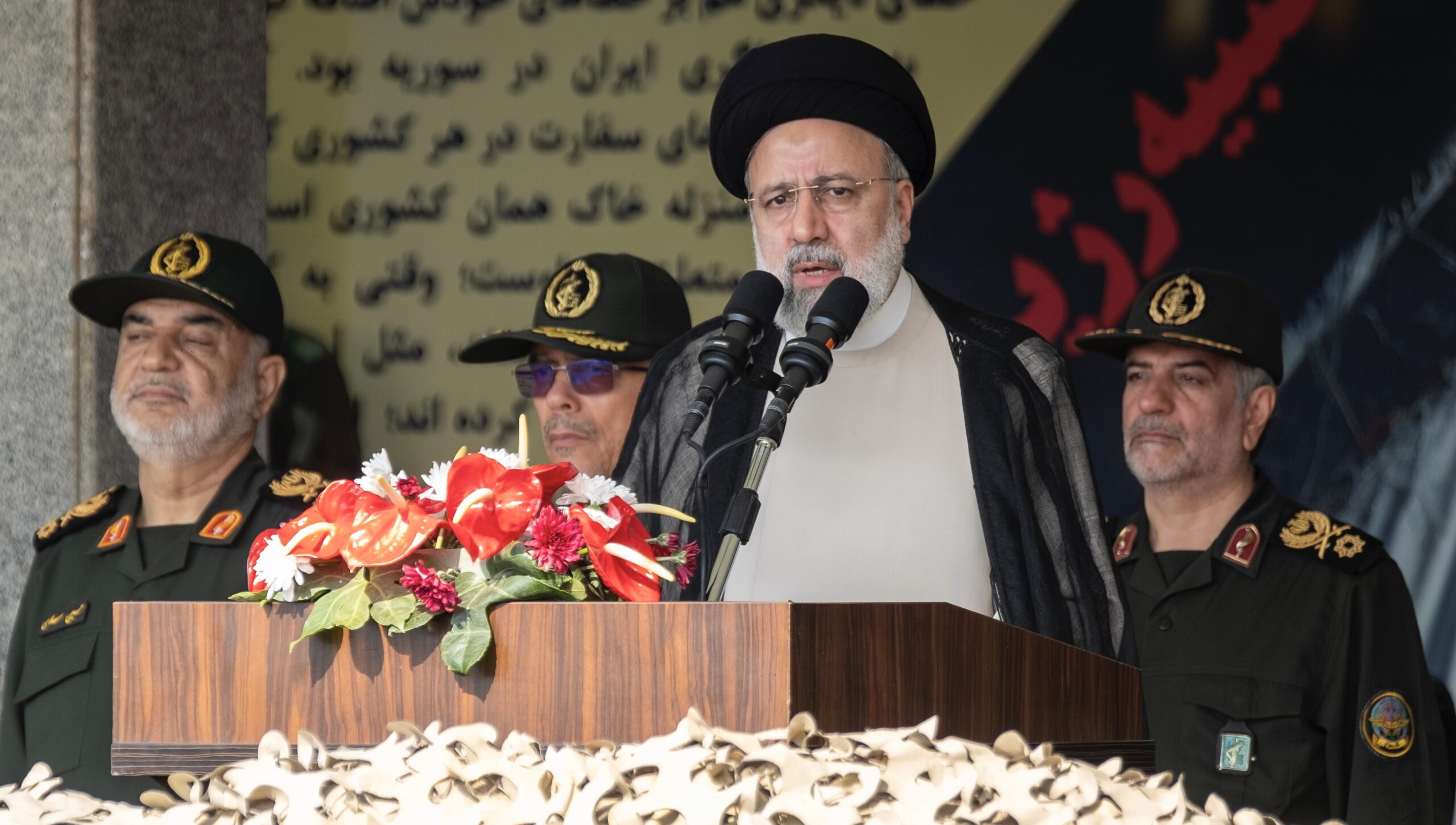
The Kaleidoscope Turns Again in a Crisis-Challenged Iran
On May 30, the Atlantic Council’s South Asia Center will release a new issue brief, The Kaleidoscope Turns Again in a Crisis-Challenged Iran, a discussion of Iran’s upcoming presidential elections.
2013 Wroclaw Global Forum

From June 13-14, the 2013 Wrocław Global Forum will bring together over 350 top policy-makers and business leaders to explore the region’s impact as an actor in Europe, as well as its crucial role in the transatlantic partnership and on the global stage.
Featured Videos