
NATOSource
Featured Publications
Council Highlights
Nawaz Offers Views on Changing Pakistani Perceptions of U.S.
Shuja Nawaz, Director of the Atlantic Council's South Asia Center, was interviewed on The Takeaway morning radio news program on the Pakistan flood situation. The discussion focused on the U.S. being the single largest donor of aid, and the potential for Pakistanis to shift their perceptions of America. Nawaz insists that the U.S. should stay the course with aid to Pakistan, but warns of the long-term effects of America's goodwill, stating that "changing image takes a long time."
Nancy Walker Addresses U.S. Africa Command Conference
Dr. Nancy J. Walker, Director of the Ansari Africa Center, gave the keynote address at Africa Command’s Senior Leader Offsite Conference in Starnberg, Germany on August 26, 2010.
South Asia Center's Shikha Bhatnagar Spotlighted
Shikha Bhatnagar's recent appointment as Associate Director of the South Asia Center of the Atlantic Council, is yet another manifestation of a growing trend of second generation Indian Americans' advent into leading Washington, DC think tanks as senior policy analysts and associates.
Chuck Hagel Discusses START Ratification on RussiaToday
Atlantic Council Chairman Chuck Hagel was interviewed for RussiaToday on delays in ratification of the START treaty in both the U.S. and Russia.
FEATURED ISSUE
In August the sunny calm and quiet that is a Swedish summer will be shattered by the impact of Joint Direct Attack Munitions dropped by F-16CM Fighting Falcons from US Air Force Europe.
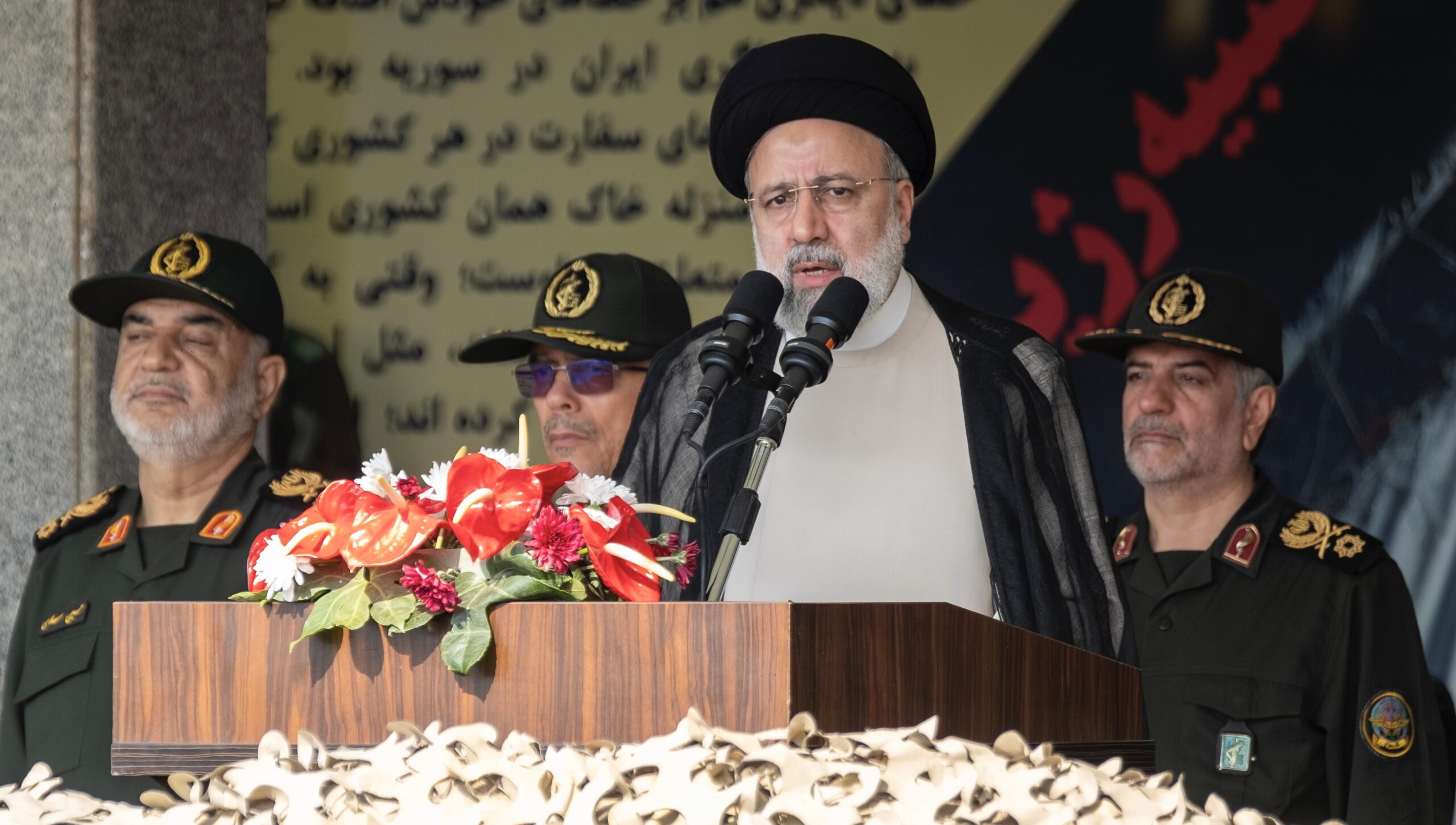
Europe Helping Iran Get Nuclear Weapons
James Joyner | February 06, 2009Benjamin Weinthal, the Jerusalem Post's Berlin correspondent, charges in WSJ Europe that European firms and governments, particularly those in Germany and Austria, are actively supporting the regime in Teheran and are at best indifferent to Iran's nuclear program. He highlights a series of major deals, many of which involve so-called "dual use" technologies (that is, those with both military and commercial application) and observes,
All of this is taking place while Iran is moving at an astonishing pace to process high-grade uranium for its atomic bomb. Iran's launch of its first domestically produced satellite on Tuesday prompted an alarmed French Foreign Ministry spokesman Eric Chevallier to underscore the link between Iran's military nuclear capability and its compatibility with the satellite technology.
Trade and security experts assert that Iran cannot easily replace high-tech German engineering technology with that from competitor nations such as China and Russia. The hollow pleas by Chancellor Angela Merkel, who favors a policy of moral pressure to convince corporations to be "sensitive" about cutting new deals with the regime in Tehran, did not prevent her administration from approving over 2,800 commercial deals with Iran in 2008.
Weinthal's solution is more sunlight:
Transparency is badly needed in this area. The German Federal Office of Economics and Export Control (BAFA) refuses to disclose the nature of these agreements. Economics Minister Michael Glos, who oversees BAFA and is considered an advocate of trade with Iran, should reveal the names of the firms commencing trade with a country that sponsors terror organizations such as Hezbollah and Hamas. The German firms are hiding behind a wall of nondisclosure to avoid being blacklisted on the U.S market.
Beyond that, he'd like to see a halt to the deals.
German legislation prohibiting trade with Iran, coupled with an immediate cessation of credit guarantees, would decisively setback, if not stop, Iran's nuclear weapons program and set an invaluable example for other EU countries to adapt for their own companies.
This highlights a longstanding problem in international security affairs: one country's potential adversary is another's potential trading partner. European states often make different calculations on these matters than do the United States or Israel. We saw that throughout the latter part of the Cold War, when West Germany was eager to trade with not only its brothers in Communist East Germany but with the Soviets themselves. While I can't recall a case off the top of my head, I presume that the United States has from time to time sold technology to countries that one or more European states would have preferred we hadn't.
While Germany may prefer that the Iranian mullahs not get their hands on nuclear weapons, they're clearly willing to take that risk — indeed, aid and abet them in doing so — at the right price. While Weinthal's call for transparency sounds like a fine step, the mere fact that he is able to list so many deals in his piece would seem evidence that the information is already out there. Presumably, the United States has decided to ignore the matter or pursue quiet diplomacy rather than risking a trade war with a key ally.
And, sure, their banning the practice would make the United States and, especially, Israel happy. Given that former Chancellor Gerhard Schröder and his successor, representing thereby both of Germany's major political parties, have been quite happy to deal with Iran makes is rather less than likely.
James Joyner is managing editor of the Atlantic Council.


Comments
Hi James,
"While I can't recall a case off the top of my head, I presume that the United States has from time to time sold technology to countries that one or more European states would have preferred we hadn't."
South Africa. Nuclear know-how and material.
But Weinthal begins with a lie.
"Iran is moving at an astonishing pace to process high-grade uranium for its atomic bomb."
No, it isn't. It is making LEU and you cannot make a bomb with LEU. The IAEA guarantees that LEU cannot be reprocessed into HEU without the Agency's foreknowledge.
Yet another in a long line of "Oh, the IAEA and the 2007 NIE? We just ignore them" statements from press and politicians - Obama being one who regularly does so.
Regards, Steve
Post new comment