

NATOSource
Featured Publications
Council Highlights
Nawaz Offers Views on Changing Pakistani Perceptions of U.S.
Shuja Nawaz, Director of the Atlantic Council's South Asia Center, was interviewed on The Takeaway morning radio news program on the Pakistan flood situation. The discussion focused on the U.S. being the single largest donor of aid, and the potential for Pakistanis to shift their perceptions of America. Nawaz insists that the U.S. should stay the course with aid to Pakistan, but warns of the long-term effects of America's goodwill, stating that "changing image takes a long time."
Nancy Walker Addresses U.S. Africa Command Conference
Dr. Nancy J. Walker, Director of the Ansari Africa Center, gave the keynote address at Africa Command’s Senior Leader Offsite Conference in Starnberg, Germany on August 26, 2010.
South Asia Center's Shikha Bhatnagar Spotlighted
Shikha Bhatnagar's recent appointment as Associate Director of the South Asia Center of the Atlantic Council, is yet another manifestation of a growing trend of second generation Indian Americans' advent into leading Washington, DC think tanks as senior policy analysts and associates.
Chuck Hagel Discusses START Ratification on RussiaToday
Atlantic Council Chairman Chuck Hagel was interviewed for RussiaToday on delays in ratification of the START treaty in both the U.S. and Russia.
FEATURED ISSUE
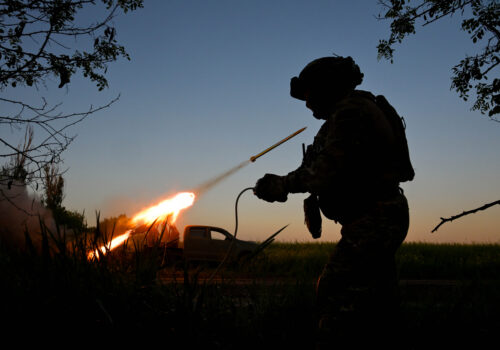
In August the sunny calm and quiet that is a Swedish summer will be shattered by the impact of Joint Direct Attack Munitions dropped by F-16CM Fighting Falcons from US Air Force Europe.
Trust Deficit Undermines U.S.-Pakistan-Afghanistan Cooperation
James Joyner | February 24, 2009Over the next three days, a high level delegation of U.S., Afghan, and Pakistani officials will meet to "seriously deal with the hard issues: how do the Afghans want to deal with [the insurgent activity on] their border, how to do this better, how to undermine those insurgents that run across their territory," Laura Rozen reports for The Cable.
Shuja Nawaz, director of the Council's South Asia Center, is skeptical. "The optics are good," he tells Rozen, but that won't be enough. "The U.S. seems to want to bring its partners into the analysis. But I am not sure if it will extend beyond that. Will Pakistan's or Afghanistan's views carry much weight? Not likely. There is still too much distrust."
He continues, "And U.S. aid to Pakistan, both military and economic, is still small compared to what it gives Egypt or Israel and there is no demand for accounting for each dollar sent to those two countries. Pakistan, meanwhile, is subjected to a reimbursement system that is fraught with suspicions and problems. And Pakistan lacks the tools it needs to fight an insurgency. Helicopters in the main. Why not give them the Blackhawks they need from the U.S. stock that has and is being replaced with newer models?"
He has, of course, already answered that question: Trust.
While recognition that Pakistan is an essential ally against al Qaeda and the Taliban has continued from the Bush administration into the Obama administration, so has skepticism about the government in Islamabad. How eager is it, really, to help? For that matter, how able?
The recent spate of agreements with various Taliban groups, essentially ceding wide swaths of Pakistan to the ostensible enemy, has, to put it mildly, not bolstered American confidence.
Nor has the reported uniting of three major Pakistani Taliban factions which, according to an "Afghan official" with a keen eye for the obvious, "certainly will place a strain on NATO efforts and Afghanistan's ability to gain control of the border region."
The trust issue works both ways.
Team Obama has also continued its predecessor's reliance on aerial strikes against suspected terrorist targets which, inevitably, results in the death of noncombatant civilians. A human rights group last week published a report titled "Losing the People: The Costs and Consequences of Civilian Suffering in Afghanistan," which contends that Anger and resentment over civilian casualties and property loss dominate Afghan views of international forces; the anger is especially strong when no help is provided following harm." As UPI Homeland and National Security Editor Shaun Waterman notes, recent polling backs that up.
The same, of course, applies to Pakistan. There, we've added insult to injury by letting it slip, thanks to certain senators unable to distinguish Top Secret briefings from newspapers, that Islamabad was cooperating fully in the Predator strikes that plausible deniability had allowed them to publicly condemn.
Our top military officials, including defense secretary Bob Gates and JCS chairman Mike Mullen are fully aware of all this and stress that great pains are being taken to prevent civilian casualties. But they're a natural policy of fighting from the relative safety of the sky, a policy which continues.
Trilateral meetings are a good start to rebuilding trust. But there is, in the words of the late Jerry Reed, a long way to go and a short time to get there.
James Joyner is managing editor of the Atlantic Council. Photo from Reuters Pictures.


Comments
Post new comment